
Sensory grounding
A simple way to steady yourself in moments of stress.
Sensory grounding is a practical, calming technique that helps bring your attention back to the present moment by tuning into your senses. When stress, anxiety, or overwhelm takes hold, grounding can interrupt racing thoughts and help you feel calmer, safer, and more connected to your surroundings.
How it works
Grounding uses your five senses - sight, touch, sound, smell, and taste to gently anchor you in the here and now. By noticing what’s around you, you guide your mind away from worry and back into your body.
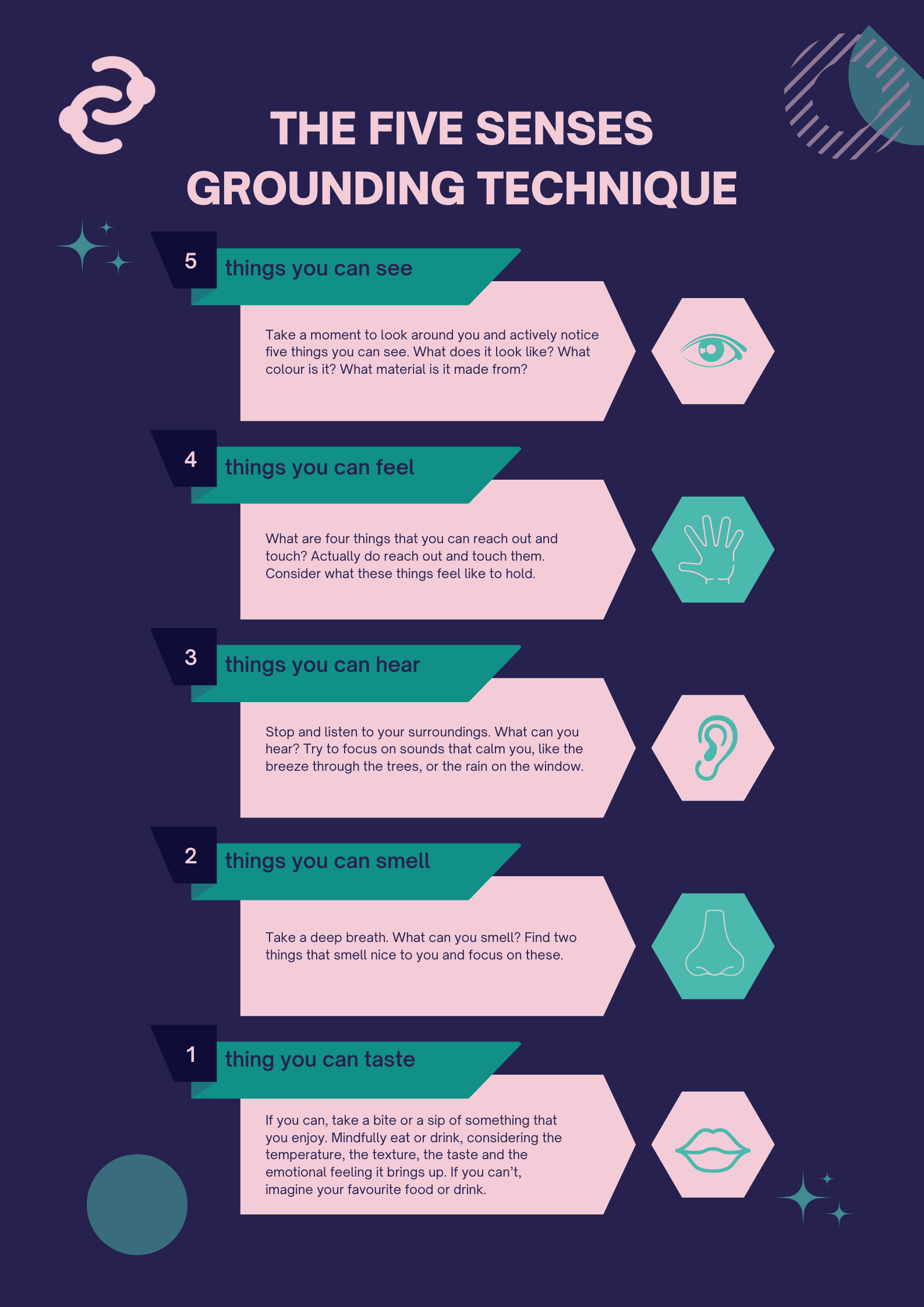
A common technique: The 5–4–3–2–1 method
5 things you can see
Look around and notice colours, shapes, light, patterns, movement, anything in your environment.
4 things you can touch
Pay attention to textures: your clothes, a chair, the floor beneath your feet, something you’re holding.
3 things you can hear
Tune into nearby and distant sounds, voices, birds, traffic, the hum of appliances, background noise.
2 things you can smell
This might be subtle: fresh air, your soap or shampoo, a cup of tea, a candle, or something in your space.
1 thing you can taste
Notice the taste in your mouth, or take a sip of water, tea, or anything nearby.
Why it helps
Brings your attention back to the present moment
Reduces feelings of panic, overwhelm, or dissociation
Helps interrupt spiralling or intrusive thoughts
Supports emotional regulation during stressful situations
Tips for getting started
Go slowly, there’s no need to rush
You don’t need “perfect” answers; simply noticing anything is enough
Adapt the numbers (e.g., 3–2–1) if you’re short on time
Works well alongside calming breaths like 4–7–8 breathing or wave breathing
When to use it
During moments of high stress, anxiety, or panic
When feeling disconnected, overwhelmed, or “not in your body”
Before or after a difficult conversation or event
As part of a regular grounding, mindfulness, or self soothing routine