
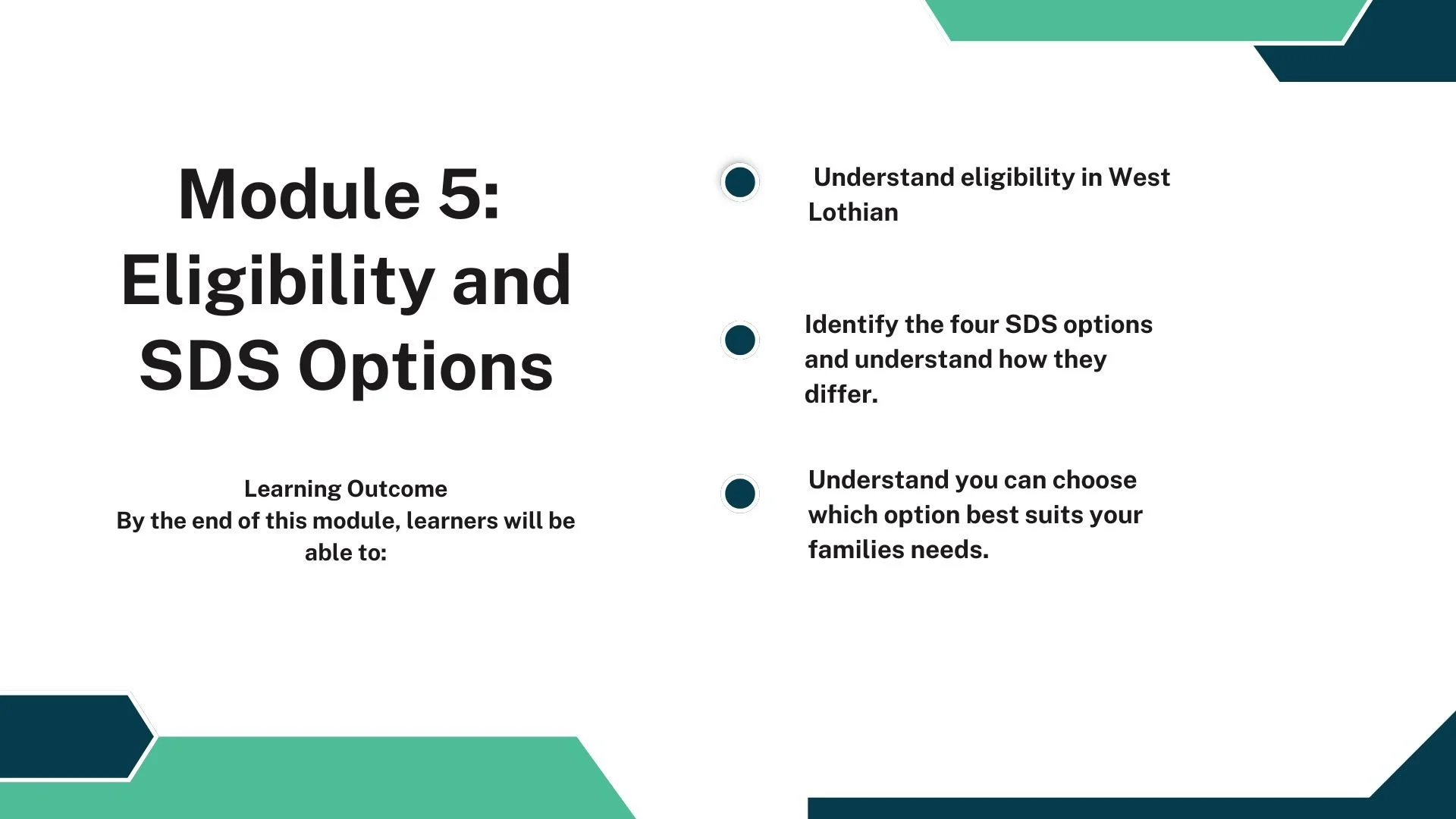
Module 5 - Eligibility & SDS Options
Module 5 Quiz
True or false: if your child is not eligible for an SDS budget, you won’t receive any support.
-
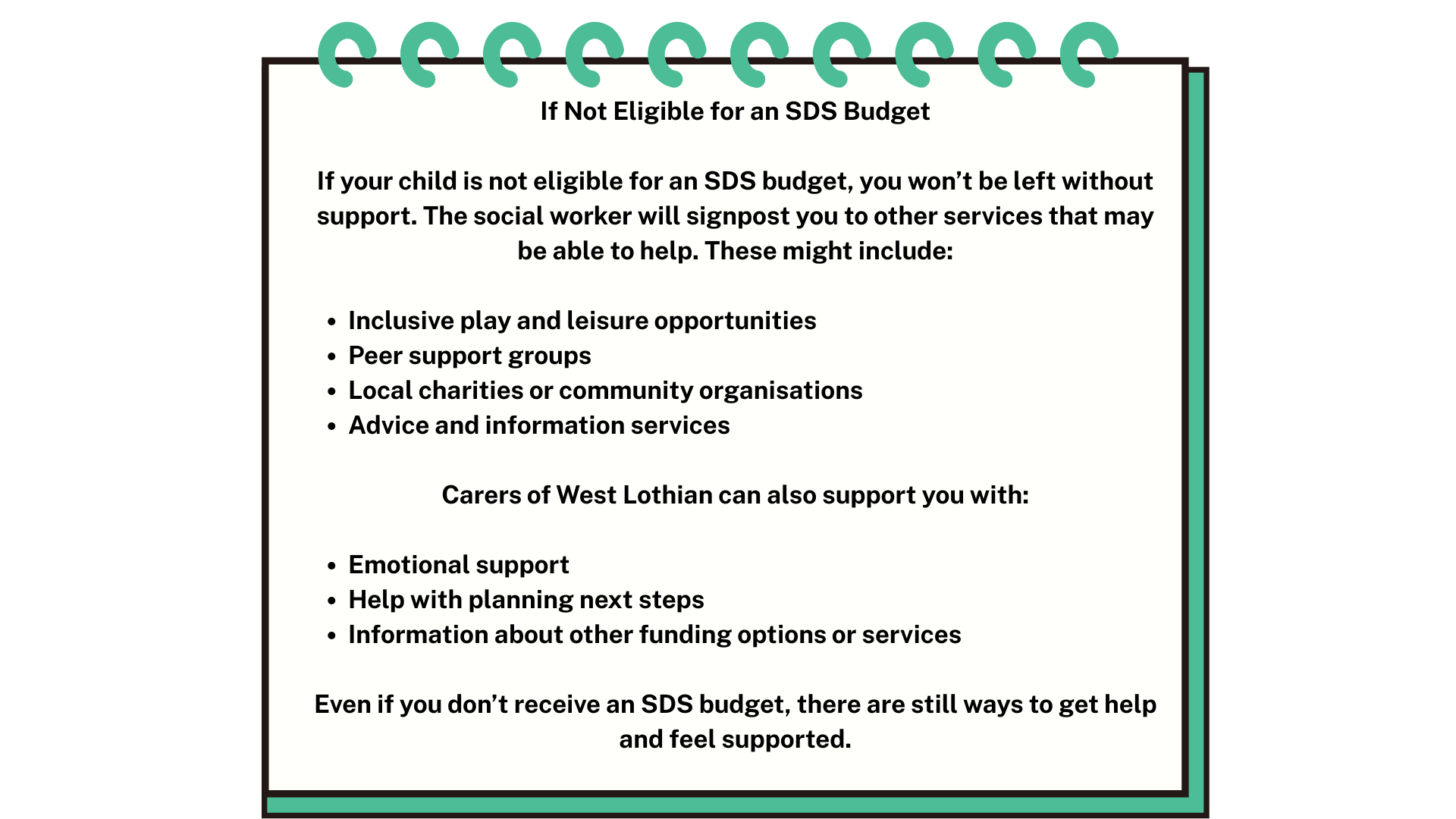
Even if your child isn’t eligible for an SDS budget, you can still receive support. Families may be offered information, advice, signposting, community resources, or other services that don’t require a budget.
This is just a reminder that support comes in many forms, not only funded package.
-
This is correct. Even if a child is not eligible for an SDS budget, families may still receive other forms of support. SDS is just one way of meeting assessed needs, and local authorities have a duty to explore alternative options if SDS isn’t suitable or available.
Which of the following might you be signposted to if your child is not eligible for SDS?
-
Education can be an important part of a child’s support network, so it’s understandable this might seem right. However, SDS signposting focuses on community-based supports, wellbeing activities, and resources that help families day-to-day.
A private school wouldn’t be part of SDS signposting, but inclusive play and leisure opportunities often are.
-
This is correct. If a child is not eligible for SDS, families may be signposted to community based supports such as inclusive play schemes, leisure activities, or other local services, including CoWL, who promote wellbeing and inclusion.
-
Housing and finances can affect family wellbeing, so it makes sense this might come to mind. However, SDS signposting is usually about practical supports, activities, and community services that can help your child thrive.
Housing benefits aren’t part of SDS pathways, but inclusive play and leisure opportunities are exactly the kind of support families may be guided toward.
What should you do if your child’s needs change after an SDS assessment?
-
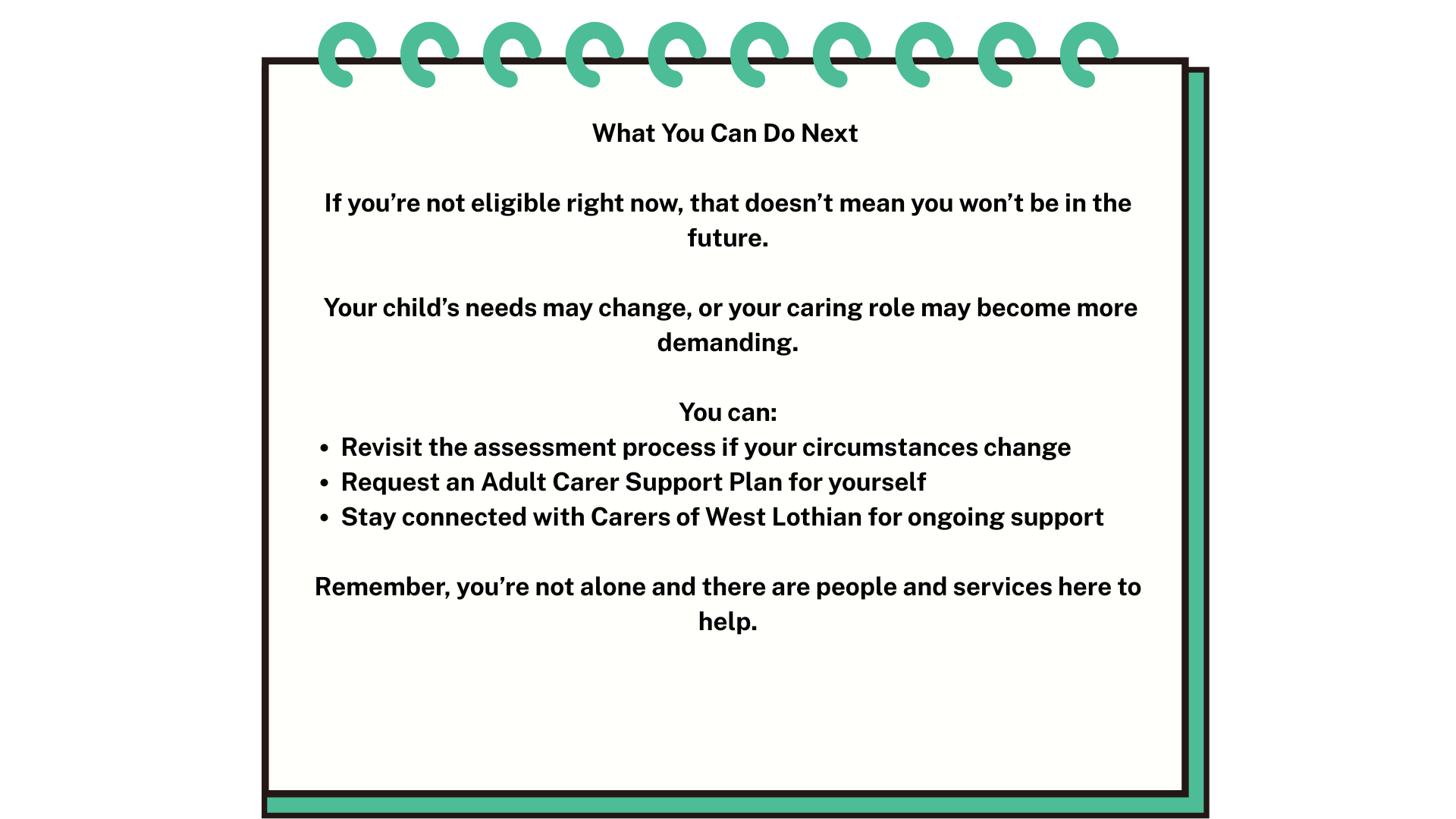
If your child’s needs change, you don’t have to wait. You can ask for a review or reapply at any time so support can be updated when it’s needed. You might have been thinking about the review process, this is just a reminder that SDS is flexible.
-
GPs are absolutely the right people to contact if your child’s health changes, or if you’re worried about their medical needs. However, changes to SDS support are handled through social care, not the GP. So if your child’s support needs change, the right step is to request a review or reapply, while still speaking to your GP about any new health concerns.
-
This is the correct answer. If your child’s needs change after an SDS assessment, you should request a review or reapply. SDS is designed to be flexible and responsive to changing circumstances, so it’s important to update the assessment to reflect your child’s current situation.