
Module 6: SDS Myth Busting
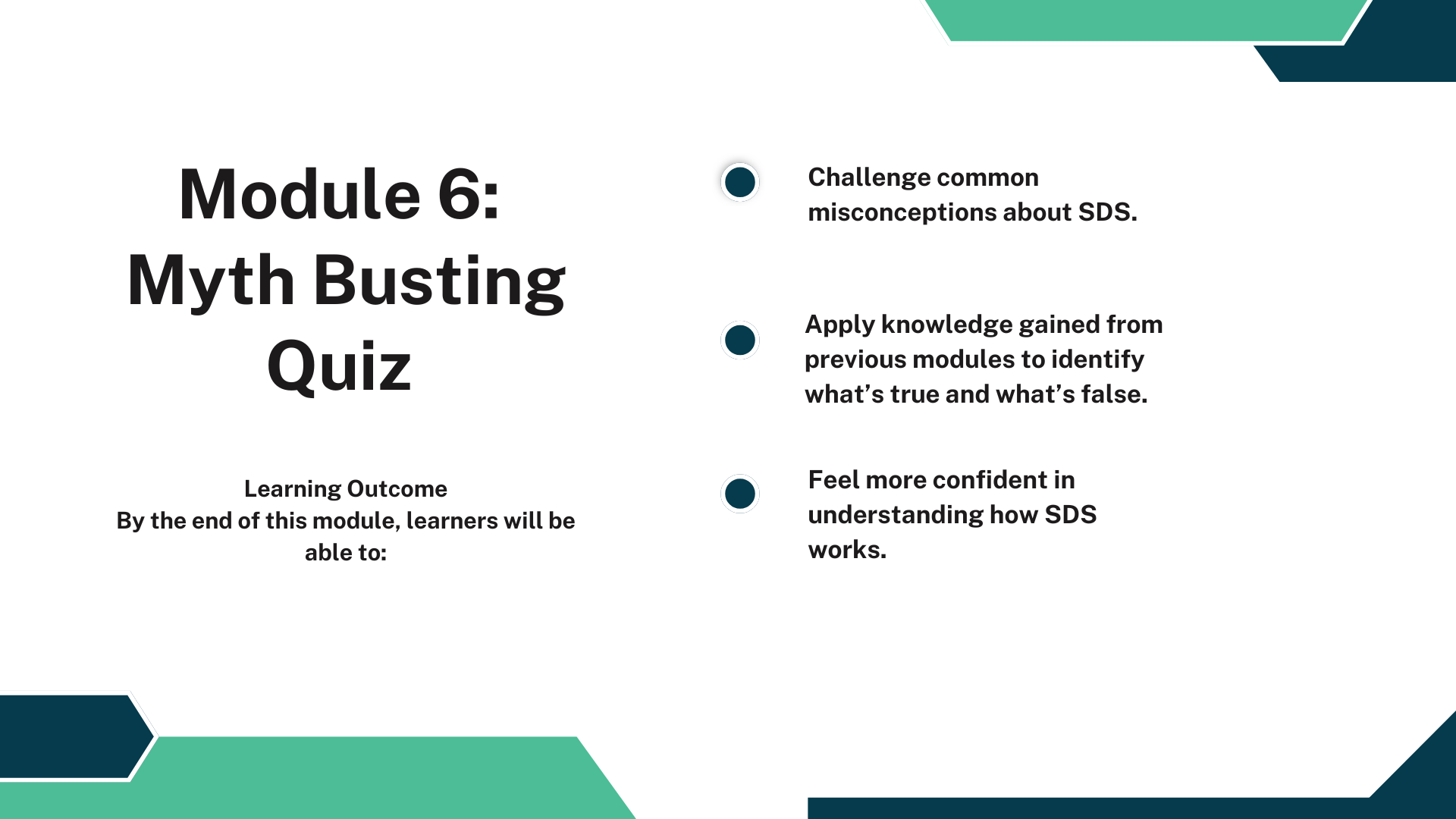
Welcome to the Myth Busting Quiz text
In this section, we’ll test your knowledge and bust some common myths about SDS.
You’ll be shown a series of statements.
For each one, decide whether it’s True or False based on what you’ve learned so far.
Let’s get started!
“You have to manage all the paperwork yourself”.
-
You don’t have to manage all the paperwork yourself. Depending on the SDS option you choose, the local authority, an agency, or an Individual Service Fund can take on some or all the paperwork.
-
You don’t have to manage everything alone, including the paperwork. Support is available from CoWL and other organisations who can support with payroll, paperwork, budgeting, and understanding your options. You can also attend the SDS Forum.
“You can use SDS for things like after-school clubs.”
-
This is correct. SDS can be used for things like after-school clubs or holiday activities if they help meet the person’s agreed outcomes. It’s about choosing support that works best for your child and your family.
-
It’s easy to assume SDS only covers traditional care services. However, SDS can be used for flexible, outcome-focused support, and that can include things like after-school clubs, play activities, or community groups, if they help meet your child’s agreed outcomes.
“SDS means you have to employ someone directly.”
-
Many people associate SDS with employing a Personal Assistant, so it’s completely understandable this might seem true. However, you don’t have to employ anyone directly unless you want to. That’s just Option 1. With the other SDS options, the local authority or an organisation can arrange the support for you, so you don’t take on employer responsibilities.
-
This is correct. While Option 1 allows you to employ a personal assistant directly, it’s not the only way to use SDS. You can choose Option 2, where someone else manages the budget. Option 3, where the council arranges services for you. Or Option 4, which is a mix-and-match approach. SDS is flexible, you choose what works best for your family.
“You can’t change your SDS option once it’s been chosen.”
-
It’s easy to think you’re ‘locked in’ once you’ve chosen an SDS option, especially when it feels like a big decision. However, you can change your SDS option if your circumstances, needs, or preferences change. SDS is designed to be flexible, so the support works for you and your family.
-
That’s correct. SDS is designed to be adaptable. If your circumstances change, or if a different option would suit you better, you can request a review and change your SDS arrangement. You’re not locked into one choice forever.
“SDS can be used to support a child’s transition to adulthood..”
-
That’s right. SDS can play a key role in supporting a child’s transition to adulthood by helping to plan and fund services that promote independence, education, employment, and overall wellbeing.
-
It’s understandable why this might seem false, because the transition to adulthood involves lots of different services and assessments. However, SDS can be used to support a young person’s transition, helping them build independence, access meaningful activities, and prepare for adult services.