
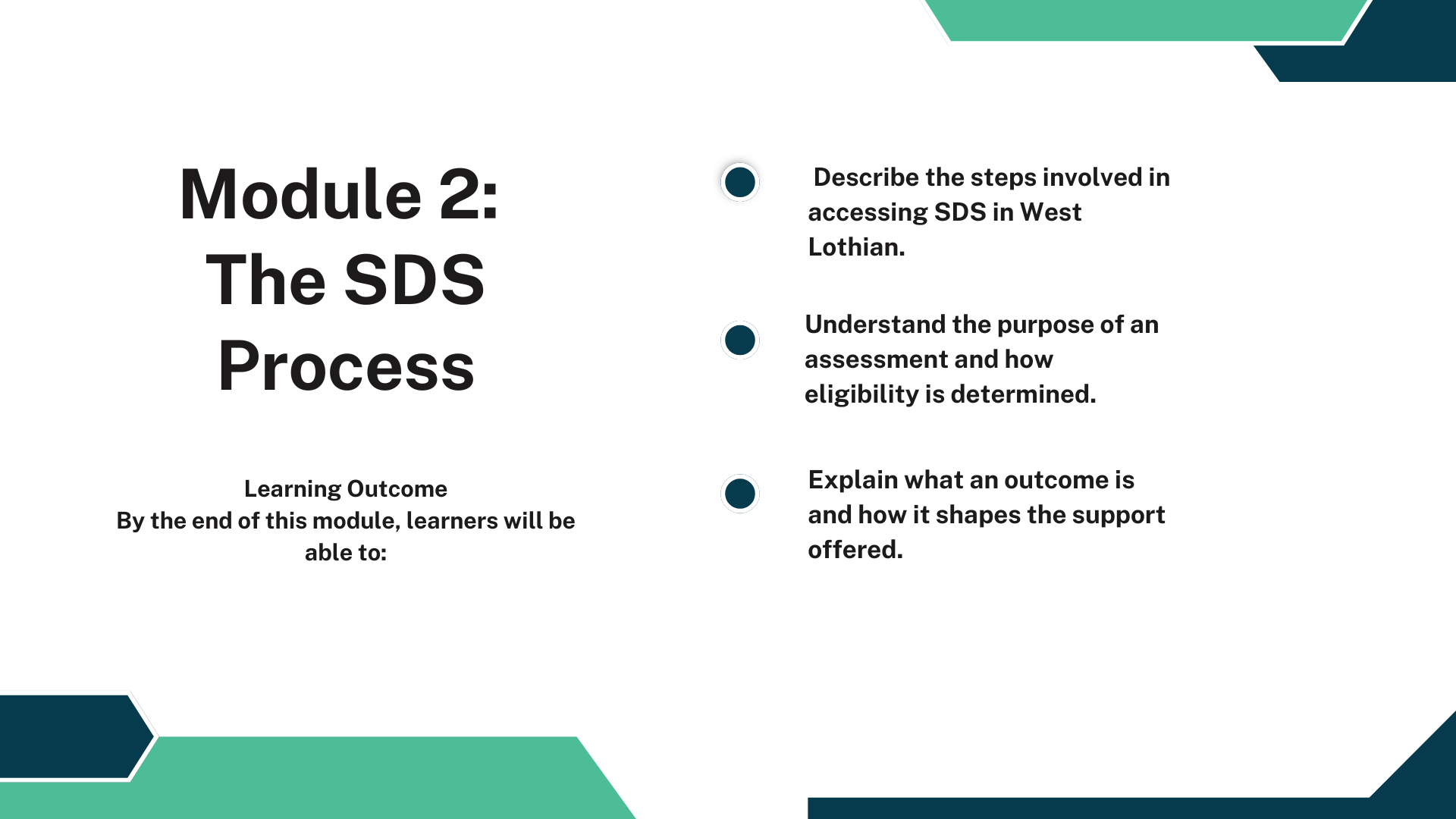
Module 2 - The SDS Process
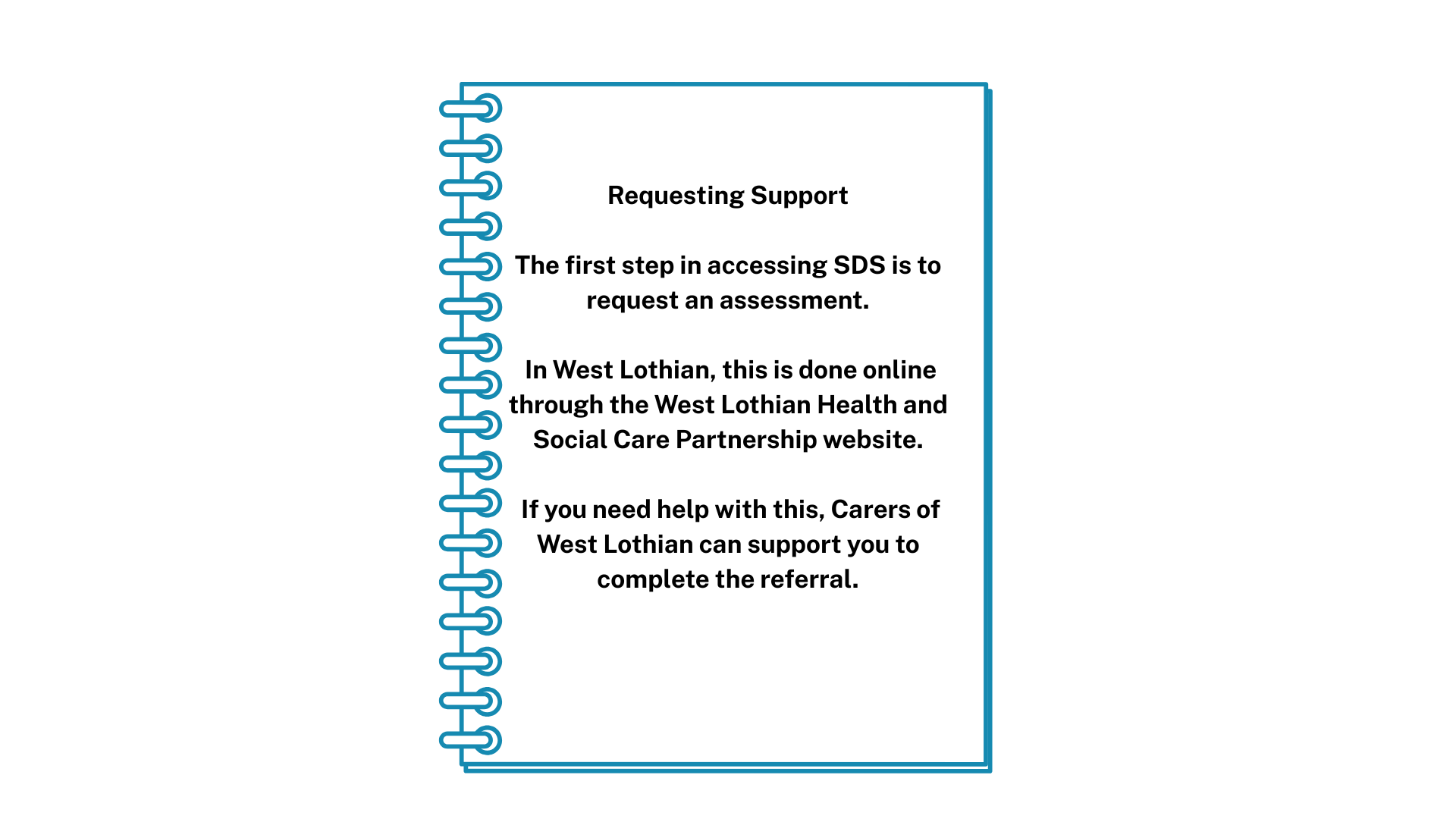
For more information from West Lothian Health & Social Care Partnership (HSCP) or to make a self referral for support, use the links below.
Module 2 Quiz
Where do you request an SDS assessment in West Lothian?
-
Yes, this is the right answer.
In West Lothian, SDS assessments are arranged through the West Lothian Health and Social Care Partnership (HSCP), which is responsible for coordinating social care services. Referrals must be made directly to HSCP, either online via their website or by contacting the relevant social work team. Carers of West Lothian (CoWL) can provide support with this process.
-
GPs are often involved in supporting people’s health needs, so it makes sense that this might seem like the right place.
GPs can signpost you to support, but they don’t process SDS assessments. In West Lothian, SDS requests go directly through the Health & Social Care Partnership, who handle social care assessments
-
Local libraries are great community hubs and often have information about local services, so it’s understandable you might choose this. However, they don’t handle SDS assessments.
The correct place to request an SDS assessment is through the West Lothian Health & Social Care Partnership, who manage all social care enquiries.”
-
Yes, you’re right.
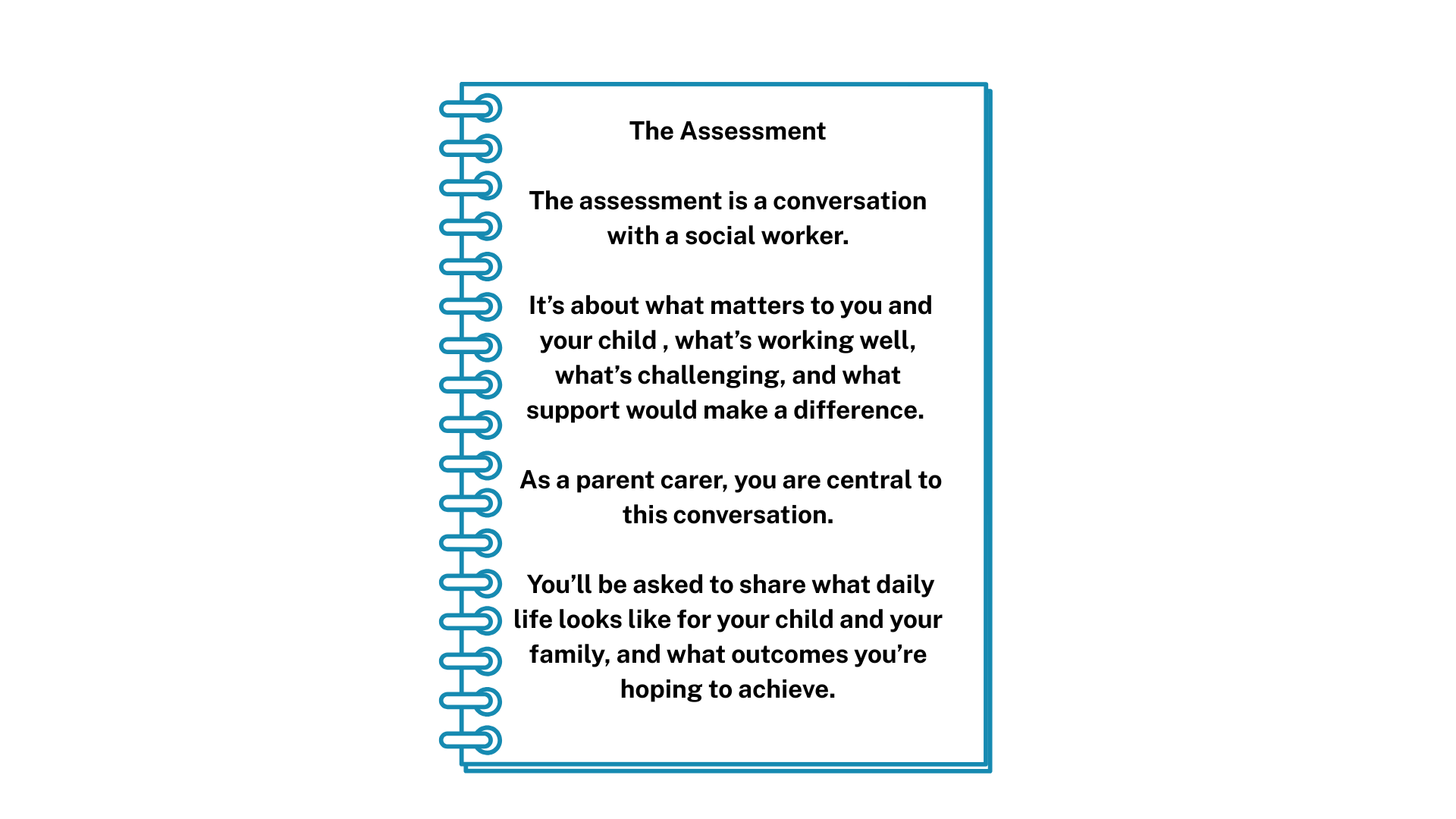
The purpose of an SDS assessment is to understand your child’s individual needs and identify the support that will help them achieve positive outcomes.
It focuses on working in partnership with families to plan care and support that is tailored, flexible, and respectful of your circumstances.
-
It’s understandable why this might seem right because assessments in other settings often focus on abilities or development. However, an SDS assessment is not a test. It’s a conversation to explore your child’s needs, strengths, and what support would help them thrive.
-
Schooling decisions can involve assessments, so it makes sense this might come to mind. However, SDS assessments don’t decide education placements.
The purpose is to understand what support would help your child and family, so that the right care options can be put in place.
What is the purpose of an SDS assessment?
What an outcome in the context of an SDS assessment?
-
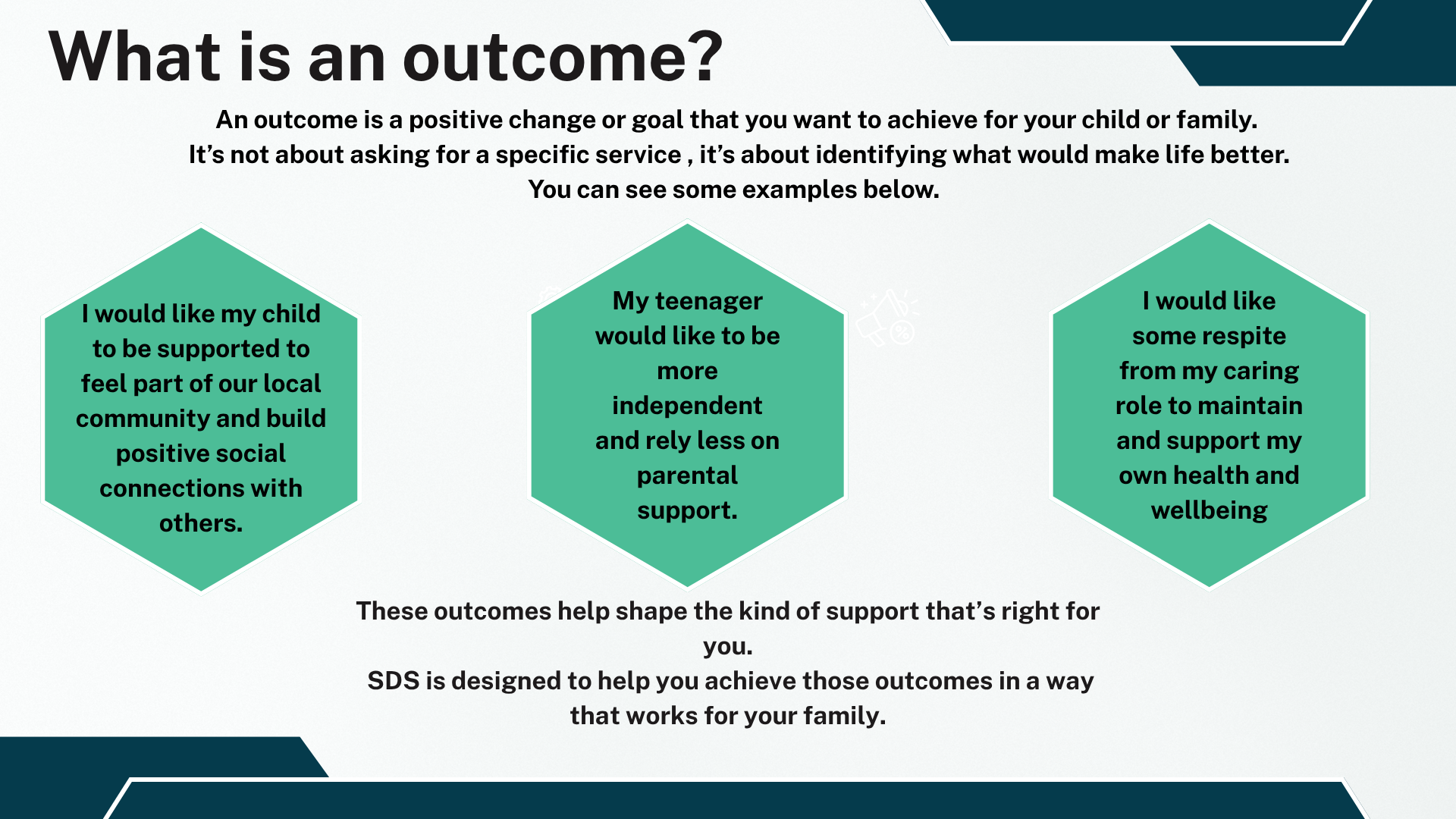
In the context of SDS, an outcome is a goal or positive change that the child or family wants to achieve. For example, improved social interaction, greater independence, or access to community activities.
Outcomes help guide the type of support required and ensure it is tailored to the individual’s needs and aspirations.
-
It’s easy to see why this might be chosen, because SDS does involve budgets and funding options. However, an outcome isn’t about money. It’s about the goals or positive changes you want to see for yourself or your child.
-
Diagnoses can influence what support someone needs, so this option can seem linked. However, an outcome isn’t a diagnosis. It’s the improvement, change, or goal you want to work towards with the right support in place.
Which eligibility bands are most likely to result in an SDS budget?
-
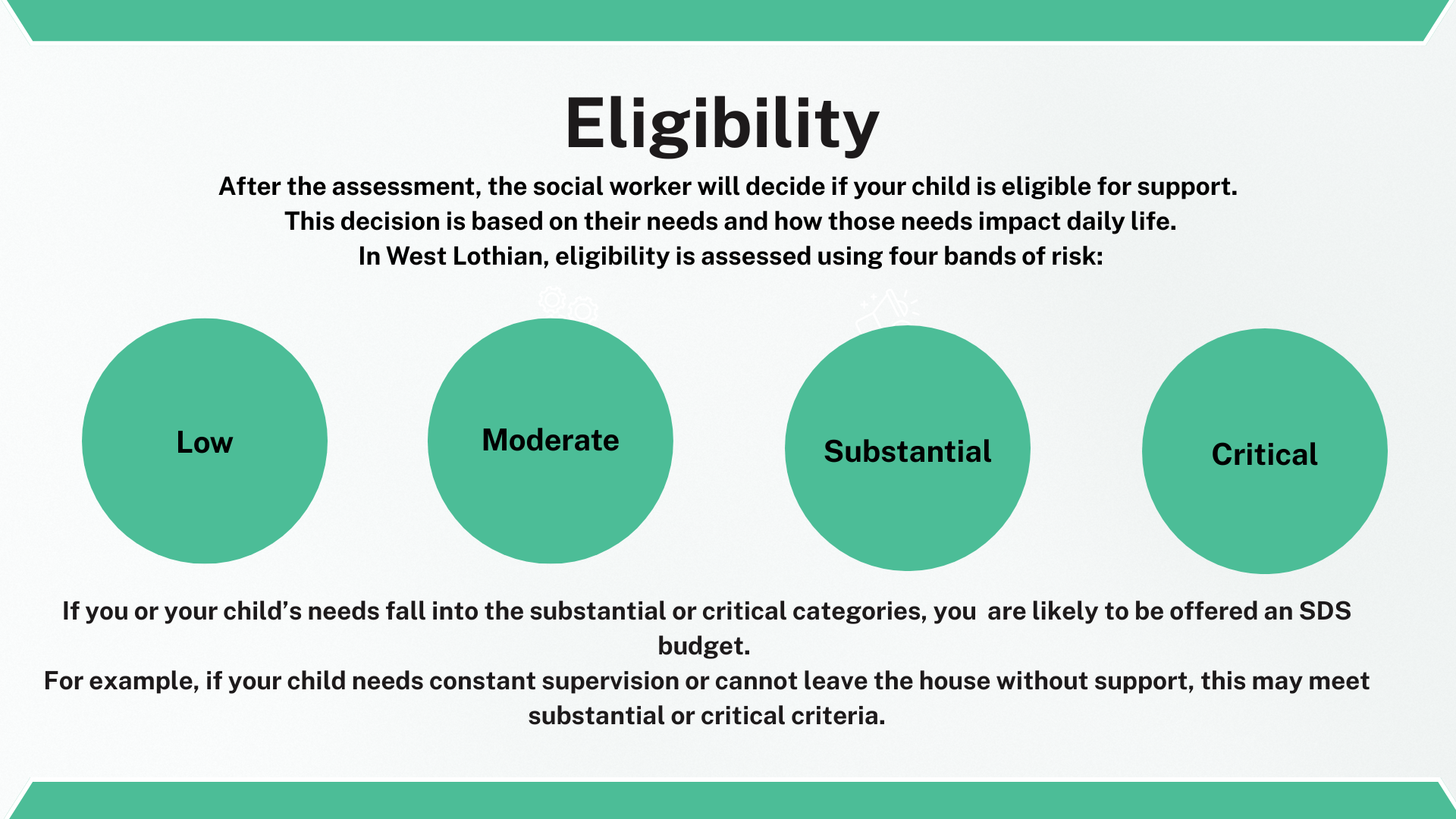
It makes sense to think all eligibility levels might lead to a budget, because everyone’s support needs matter. However, in practice, SDS budgets are usually offered when needs fall into the ‘Substantial’ or ‘Critical’ bands, as these reflect higher levels of risk or support requirements.
-
In SDS, eligibility is assessed using four bands: Low, Moderate, Substantial, and Critical. Individuals assessed as having Substantial or Critical needs are most likely to receive an SDS budget, as these levels indicate a significant impact on wellbeing, safety, or independence without support.