
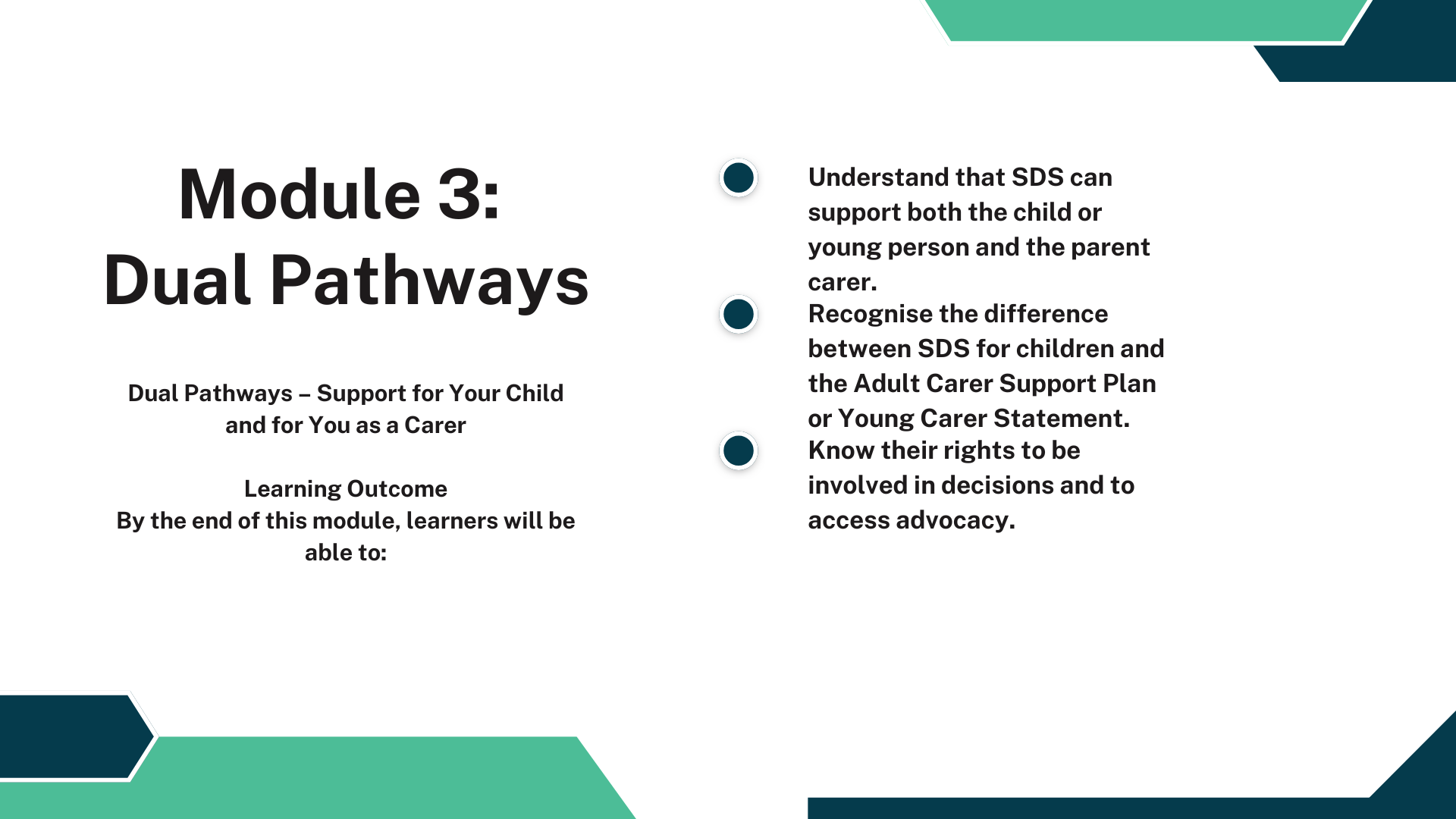
Module 3 - Dual Pathways
Module 3 Quiz
What are the two main pathways for support through SDS
-
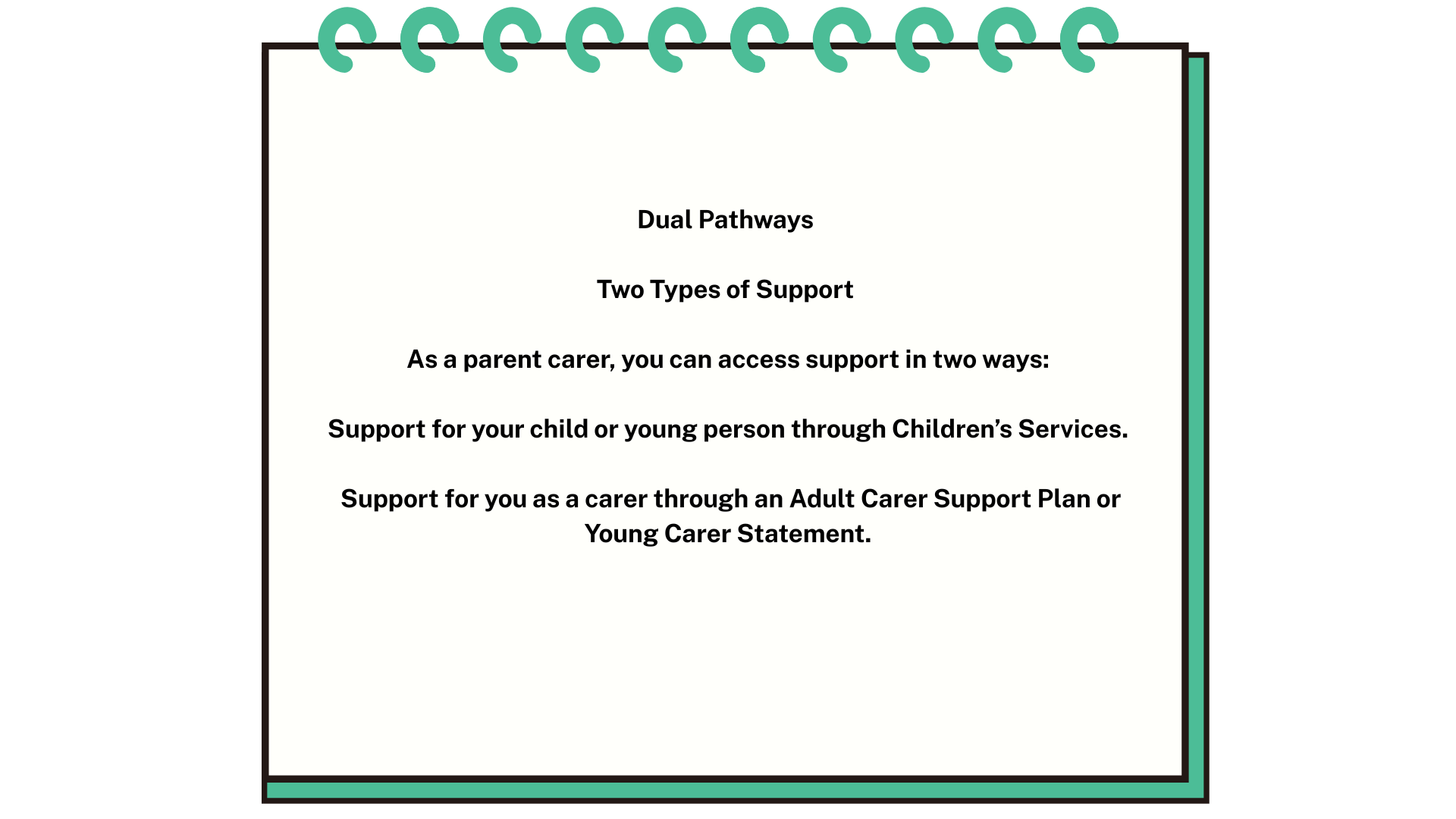
There are two main pathways for support through (SDS) when you’re a parent carer. SDS can be used to meet the needs of the person you care for (your child) and to support you in your caring role, recognising that carers have their own needs too.
-
it’s understandable to think of SDS in terms of funding or health needs because both can play a role in support planning.
However, SDS isn’t divided into financial vs. medical pathways. Instead, it focuses on who needs the support — your child, you as a carer, or both.
-
School and home are major parts of a child’s life, so it makes sense this might seem right. However, SDS doesn’t categorise support by location. The two main pathways relate to your child’s needs and your needs as a career, so both can receive the right kind of help.
True or false: children under 18 must complete a financial assessment to access SDS
-
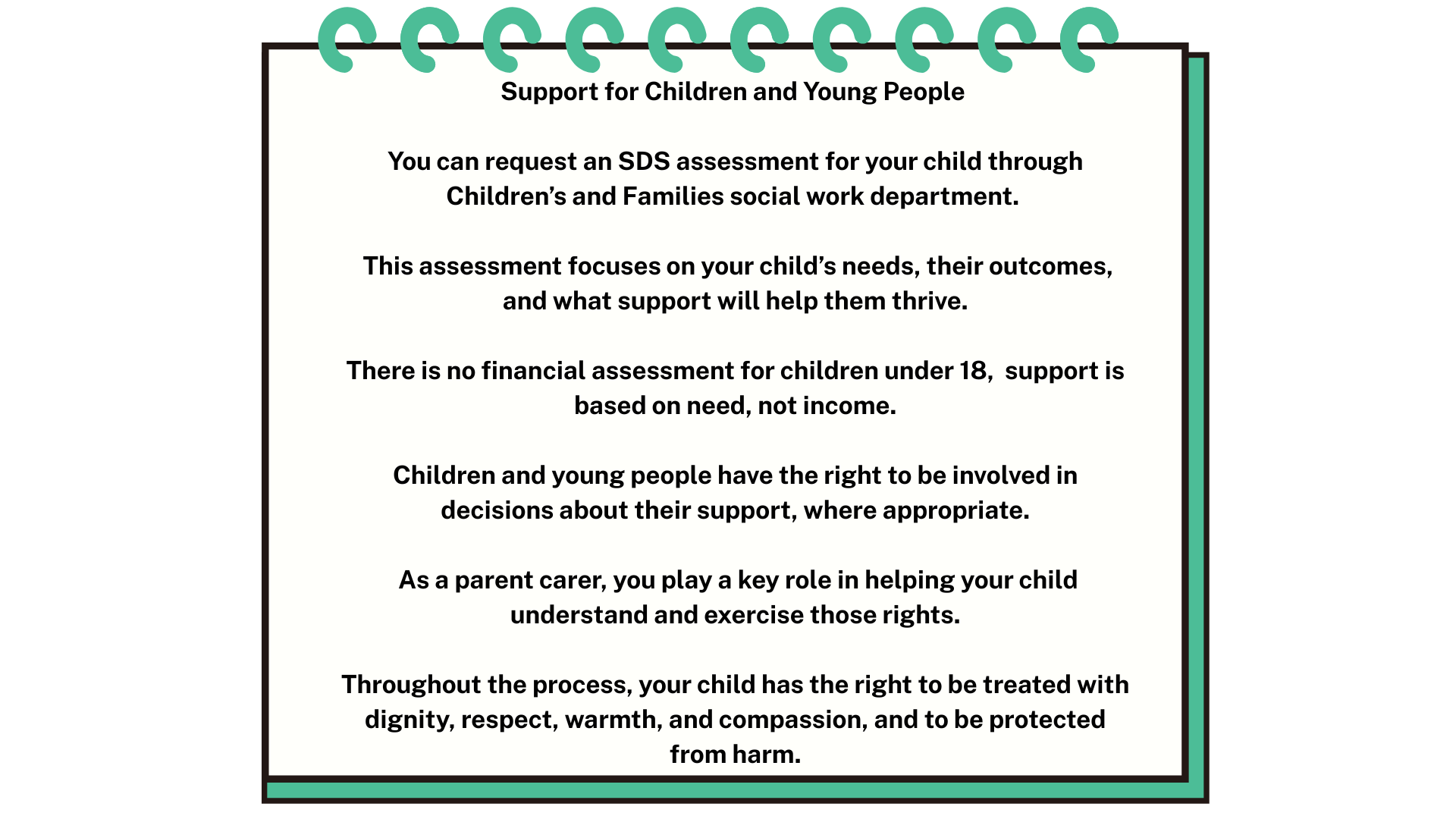
It’s easy to see why this might seem true, because financial assessments are sometimes part of adult social care. However, children and young people do not need a financial assessment to access SDS. Support is based on their needs, not their family’s income.
-
This is the correct answer. Children under 18 do not need to complete a financial assessment to access SDS. The assessment process for children focuses on their needs, not their family's financial situation. This helps ensure that support is based on what's best for the child, rather than income.
What is the name of the assessment for adult carers?
-
A Child’s Plan is indeed a real assessment tool, but it’s used for children and young people, not adult carers.
It’s easy to mix these up because both involve identifying needs and planning support.
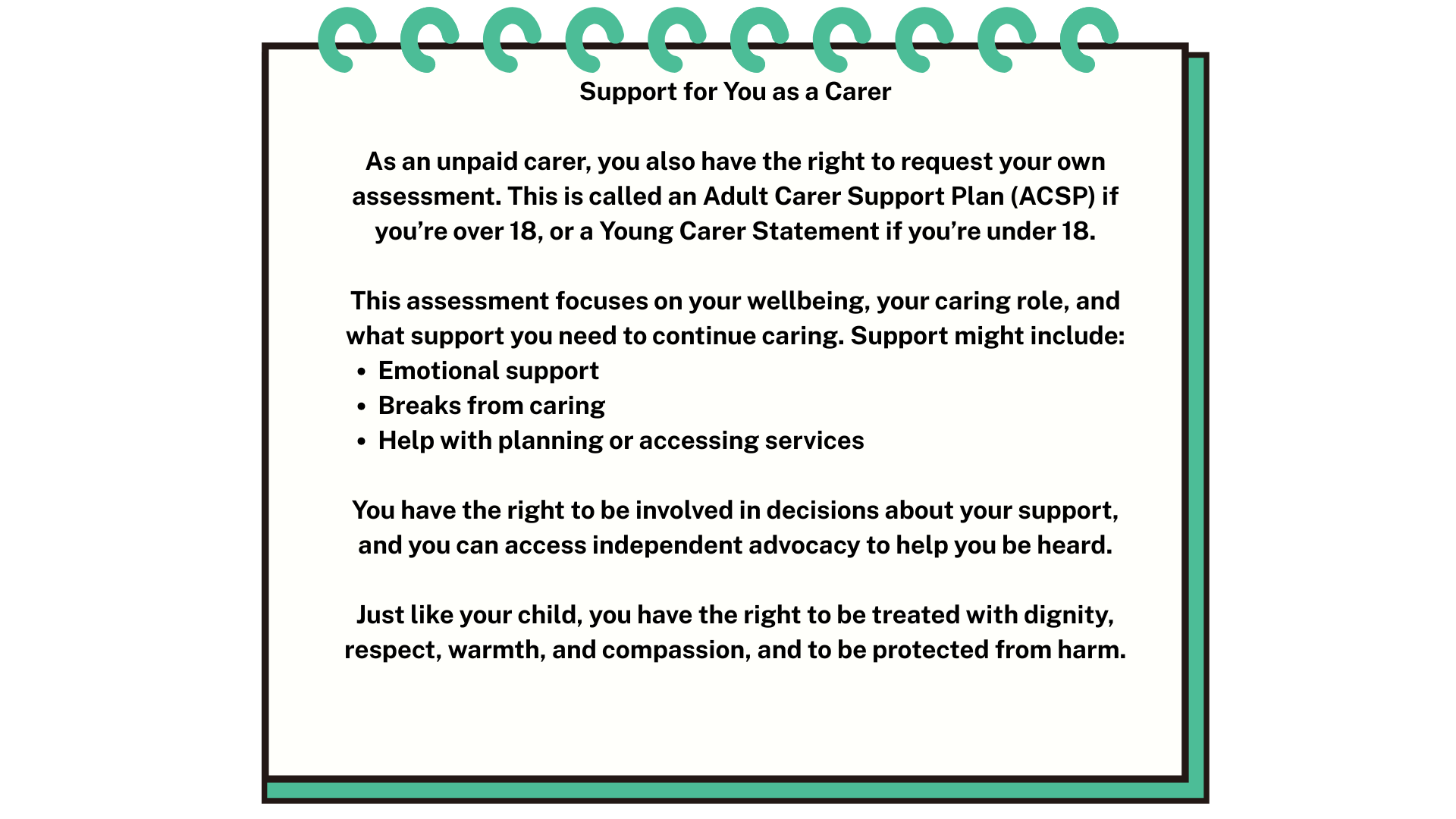
For adult carers, the correct assessment is the Adult Carer Support Plan, which focuses on your wellbeing and what support would help you in your caring role.
-
This is the correct answer.
An Adult Carer Support Plan is a formal assessment designed to identify the needs of adult carers. It looks at how caring impacts your life and what support could help you in your caring role.
This is separate from assessments for the person you care for and gives you the opportunity to focus on your own wellbeing.
-
SDS does involve budgets, so it makes sense this option might catch your eye. However, an SDS budget form is about how funding is arranged, not about assessing a carer’s needs.
The assessment for adult carers is the Adult Carer Support Plan, which explores your situation, your needs, and what support would make a positive difference for you
Which of the following is a right of both children and carers during the SDS process?
-
Transport can sometimes be part of a support plan, so it’s understandable this might seem like a right. However, free transport isn’t guaranteed within SDS.
A universal right that applies to both children and carers is being treated with dignity and respect throughout the assessment and support process.
-
This is the correct answer.
Being treated with dignity and respect is a fundamental right for both children and carers throughout the SDS process. The principles of SDS are built on respect, fairness, and inclusion, ensuring that everyone involved is listened to, valued, and supported in a way that works for them.
-
Educational decisions are important, so it makes sense this might seem linked to SDS. However, choosing a school isn’t part of SDS rights. What is a right for both children and carers is being treated with dignity and respect at every stage.