
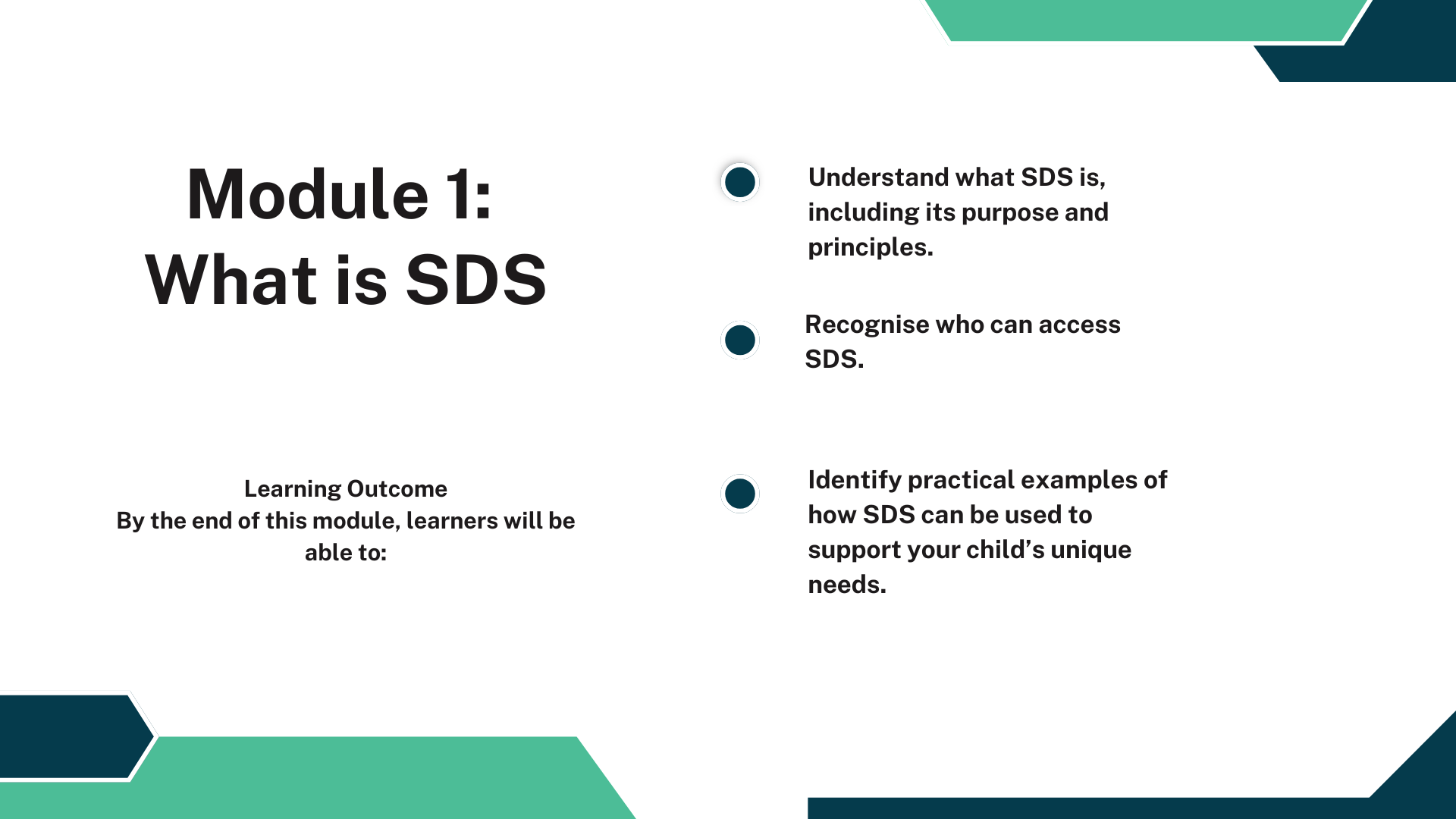
Module 1 - Parent and Carers Online Training
Module 1 Quiz
-
This is the correct answer, well done.
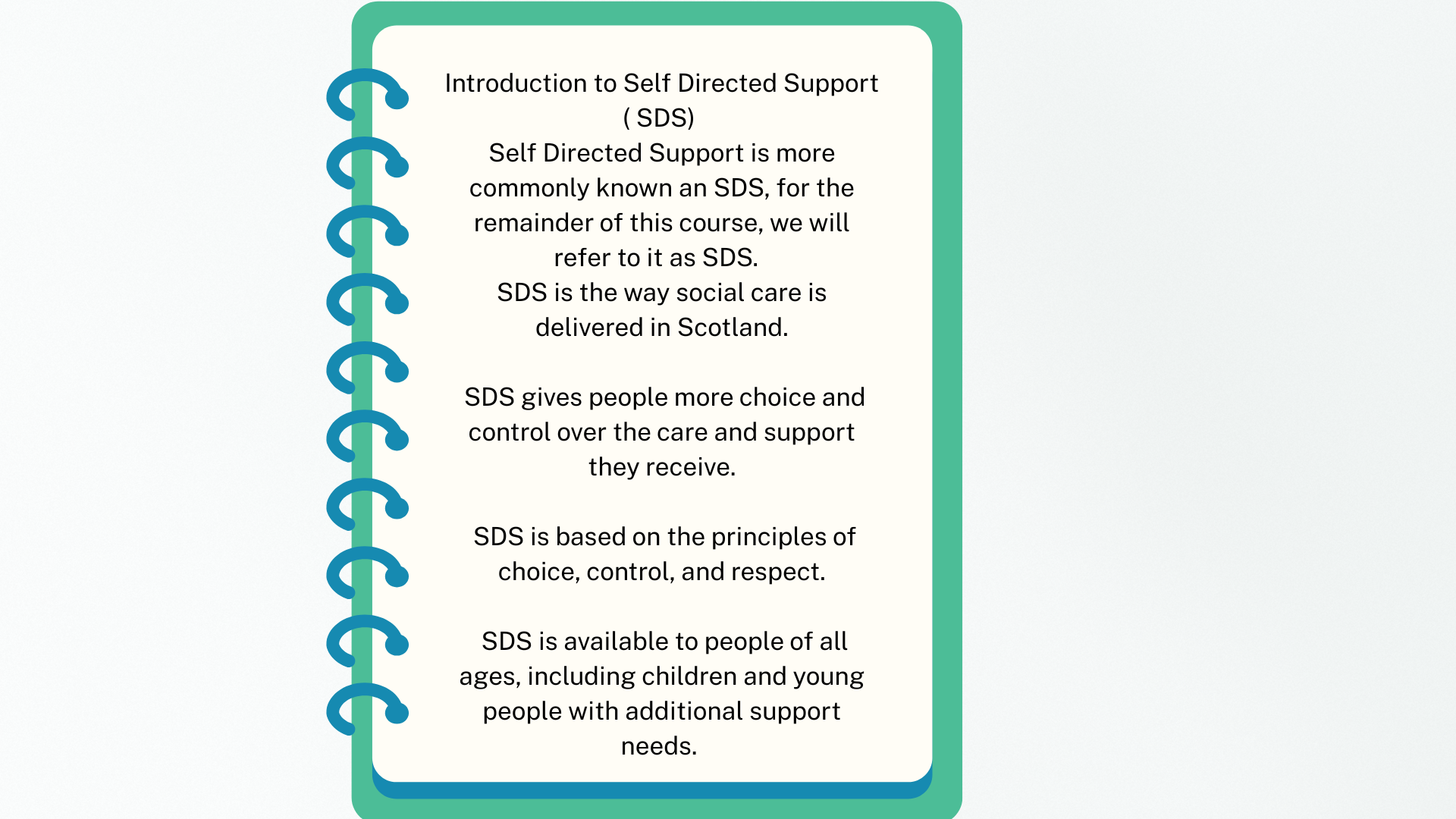
SDS is the way social care is delivered in Scotland that allows people to have more choice and control over the support they receive. It means individuals can tailor their care to suit their own needs and preferences, helping them live more independently.
-
This may seem correct because SDS does relate to support in daily life, However, SDS stands for Self-Directed Support.
Supported Daily Services describes a type of practical help someone might receive day-to-day, so it’s an understandable choice.
-
‘Social Development Scheme’ describes wider social initiatives, but it isn’t what SDS stands for in social care.
SDS means Self-Directed Support, which is all about empowering people to make decisions about their own care. You’re building good awareness keep going!
1. What does SDS stand for?
-
It’s understandable why this might seem true, because many people first hear about SDS through adult social care.
However, SDS is available to children, young people, adults, and carers. Support is based on need and eligibility, not age.
-
SDS is available to adults, children, and young people who need social care support. SDS applies to anyone eligible for social care, regardless of age, and aims to give individuals and families more choice and control over how support is provided.
2. True or false - SDS is only available to adults?
3. Which of the following is a key principle of SDS?
-
Every option is correct for this question, SDS is built on several principles, including Choice, Control, and Respect.
-
Every option is correct for this question, SDS is built on several principles, including Choice, Control, and Respect.
-
Every option is correct for this question, SDS is built on several principles, including Choice, Control, and Respect.
-
Correct!
Every option is correct for this question, SDS is built on several principles, including Choice, Control, and Respect.